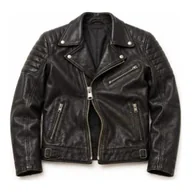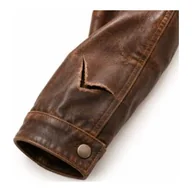
- Can it be fixed?
- Usually – split seams are the easiest; tears with missing leather take a patch or panel.
- Safe to fix yourself?
- No. Glue, iron-on patches and home stitching leave stiff spots and new holes in the leather.
- What decides the cost?
- Seam or tear, its size and spot, the leather and color, and whether a panel is needed.
- Mail it in?
- Yes, from anywhere in the US.
- While you wait?
- Some small repairs, yes. Call ahead.
Which problem is it?
Lay the jacket flat and look at the damage up close; it usually fits one of these:
Seam split open
The thread gave out along a seam, often under the arm, at the shoulder or down the back, but the leather edges are clean. This is usually the least visible repair, because the seam can be re-stitched along its original line.
Clean rip in a panel
A nail, a car door or a fall can rip the leather in the middle of a panel. If the edges still meet and nothing is missing, the tear can usually be patched and color-matched so the line is much less noticeable.
Leather missing or scraped through
A slide on pavement or a snag can tear a piece away or grind the leather thin. With nothing left to bring together, the spot needs a patch, or a new leather panel for that section when the damage is large.
Dry leather cracking open
Old or neglected leather can dry out, especially in Las Vegas heat, and start splitting at the elbows, cuffs and collar. One crack can be repaired, but if the leather tears wherever you pull on it, patches won’t keep up.
What to do right now.
- Stop wearing the jacket until it’s repaired, because every reach and shrug pulls the tear a little wider.
- Keep any piece of leather that came off, even a small one, and leave ragged edges as they are.
- Hang it on a wide, padded hanger away from heat and direct sun.
- Photograph the whole jacket, the tear up close, and the inside of the tear if you can reach it.
What not to do.
- Don’t iron on a patch or press the leather with an iron; the heat can scorch, shrink or harden it.
- Don’t stitch it yourself with a regular needle and thread, because every new hole in leather is permanent.
- Don’t fill the tear with super glue or a repair-kit filler, which hardens, cracks and has to come out before a proper patch.
When it’s not worth repairing.
If it’s an inexpensive faux leather jacket that’s peeling, or real leather so dry it tears wherever you touch it, repairs won’t hold up and replacing the jacket usually makes more sense. Several large tears can also add up to more than the jacket is worth to you. A good jacket with one tear or a split seam is usually worth fixing.
How we fix it.
- We look at the tear, the leather around it and the seams nearby, and confirm the price with you before any work starts.
- Split seams are re-stitched along the original stitch line.
- Tears are patched and the area is color-matched to the jacket; where leather is missing, we patch it or fit a new leather panel.
- When a plain patch would stand out, a more creative repair can be an option – the shop once took a torn Versace jacket “from torn to reborn.”