- Can it be fixed?
- Genuine leather: often. Bonded or faux leather peeling across the surface: rarely for good.
- Safe to fix yourself?
- Conditioner may slow cracking on genuine leather; no product stops bonded leather from peeling.
- What decides the cost?
- Leather type, how much of the couch is affected, the color, and whether panels need replacing.
- Mail it in?
- Not for furniture or car seats. Pickup and delivery are available for larger pieces.
- While you wait?
- Some small repairs, yes. Call ahead.
Which problem is it?
Before anything else, figure out which of these you have:
Genuine leather, cracked or faded
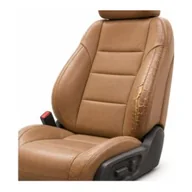
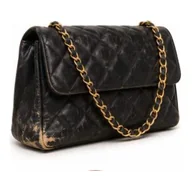
Real leather dries out and cracks, fades, or rubs through on arms and seat fronts, but it doesn’t come off in sheets. Under a worn spot you’ll see fibrous, suede-like leather, not fabric. This is usually repairable with cleaning, repair and refinishing.
Genuine leather, finish flaking
Sometimes only the colored top coat on real leather lifts in small flakes, often where heads and arms rest. The leather underneath is still fibrous and solid. This is finish damage, and it can usually be cleaned and refinished.
Bonded or faux leather peeling
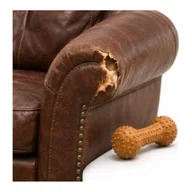
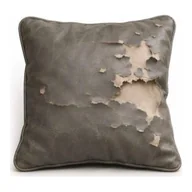
Bonded leather is leather scraps bonded to a fabric backing; faux leather is a plastic coating on fabric. When either one peels, a thin skin comes off in sheets or flakes and shows woven fabric underneath. Once it starts, it usually keeps spreading.
Leather seats, vinyl sides
Many sofas are “leather match”: real leather where you sit, with matching vinyl or faux leather on the sides and back. If the seats crack but the sides peel, you likely have both, and each part needs a different answer.
What to do right now.
- Look closely at a peeling or worn spot: woven fabric underneath means bonded or faux, while fibrous, suede-like material means genuine leather.
- Find the tag or paperwork from the couch, look for words like “bonded leather,” “PU,” “faux,” “leather match” or “top grain,” and photograph it.
- Keep the couch out of direct sun and away from heating and air conditioning vents, which dry out real leather and speed up peeling on faux.
- Take photos of the whole couch and close-ups of the worst areas for a free estimate.
What not to do.
- Don’t pull off loose flakes or sand the peeling area; it spreads the damage and makes the edges harder to blend.
- Don’t paint over peeling bonded leather with leather paint or a recoloring kit, because new color can’t hold to a surface that’s still lifting.
- Don’t use a hair dryer or heat gun to flatten cracks or flakes; heat dries leather further and can melt faux coatings.
When it’s not worth repairing.
If it’s bonded or faux leather peeling across the seats, arms and back, we’ll tell you straight: no repair makes that surface stop peeling for good, and fighting it usually costs more than it’s worth. Replacing the couch is often the better use of your money. Genuine leather is different – cracked, faded real leather is usually worth restoring, especially on a solid frame.
How we fix it.
- From your photos or a visit, we tell you whether it’s genuine, bonded or faux leather and what’s realistically possible.
- On genuine leather, we clean the surface, repair cracks and worn spots, patch where needed, then color-match and refinish so it looks even again.
- If a section of genuine leather is too far gone, a new leather panel can replace it, color-matched to the rest of the couch.
- For larger pieces, call to arrange pickup and delivery; charges may apply.