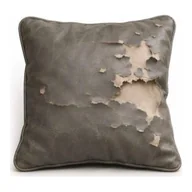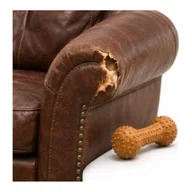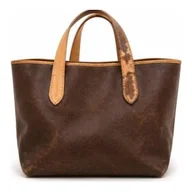
- Can it be fixed?
- Usually – surface cracks and worn color refinish well; tears through the leather may need a panel.
- Safe to fix yourself?
- Cleaning and conditioning help prevent cracks; DIY filler on a flexing bolster often cracks again.
- What decides the cost?
- How many seats, the size and depth of cracks or tears, foam damage, and color matching.
- Mail it in?
- Not for furniture or car seats. Pickup and delivery are available for larger pieces.
- While you wait?
- Some small repairs, yes. Call ahead.
Which problem is it?
Look at the seat in good light and find your case below:
Fine cracks from sun and heat
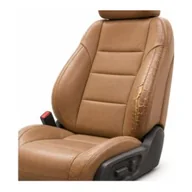
A web of small surface cracks, often on the seat top and backrest, comes from sun and heat drying the leather out. Las Vegas summers in an outdoor parking lot are hard on leather. If it’s still soft and in one piece, cleaning, repair and refinishing usually bring it back.
Driver-side bolster worn first
The outer side bolster on the driver’s seat takes a rub every time you slide in and out. It usually loses color first, then creases and cracks. Caught early, it can often be repaired and refinished; left alone, it may split.
Tear or split all the way
If you can see foam or backing through a crack, or a seam has pulled open, it’s past surface repair. Small splits can sometimes be patched; long tears or a split panel usually need that section replaced with a new panel.
Bolster feels flat or collapsed
When the foam under the bolster breaks down, the leather over it folds and cracks faster, and refinishing alone won’t hold there. This often means a new panel. Mention the flat or squishy spot when you send photos, because it changes the repair.
What to do right now.
- Use a windshield sunshade and park in shade or a garage when you can, since sun through the glass is what dries the leather out.
- Slide in and out of the driver’s seat instead of dragging across the bolster, and don’t kneel on it.
- Wipe the seats with a damp cloth and a mild leather cleaner rather than all-purpose household sprays.
- Photograph each damaged seat from a few steps back and up close, and note your car’s make, model and year.
What not to do.
- Don’t use household cleaners with alcohol, bleach or ammonia on leather seats; they strip the finish and speed up cracking.
- Don’t super-glue a split or fill it with a DIY kit before getting an estimate, because hardened glue and filler are hard to work over.
- Don’t ignore a small split in the bolster; every time you get in, it pulls a little wider.
When it’s not worth repairing.
If every seat is cracked through, the foam is crumbling and the car is near the end of its life, repairing all the seats may cost more than it’s worth; a good used seat from a salvage yard can be the cheaper answer. Also check that your seats are real leather – many cars use vinyl or synthetic leatherette, and the options differ.
How we fix it.
- Text photos of each seat to (702) 622-0659 for a free estimate, then call the shop to talk through the next step for your car.
- We clean the leather, repair cracks and worn areas, then color-match and refinish so the seat looks even again.
- Where the leather is torn through or the bolster is too far gone, the damaged section is repaired or replaced with a new panel and color-matched to the rest of the seat.