- Can it be fixed?
- Usually – surface scratches refinish well; deep or shredded spots improve a lot but may still show.
- Safe to fix yourself?
- Gentle rubbing can soften light marks; markers, shoe polish and filler often leave obvious patches.
- What decides the cost?
- How many areas are scratched, how deep, the leather type and color, and whether a patch is needed.
- Mail it in?
- Not for furniture or car seats. Pickup and delivery are available for larger pieces.
- While you wait?
- Some small repairs, yes. Call ahead.
Which problem is it?
Run your hand over the scratches and see which of these you have:
Light scratches in the finish
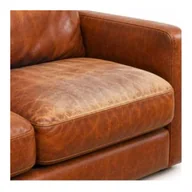
Thin lines that look paler than the rest of the couch but feel smooth, often on seat cushions where a dog jumps up or a cat walks across. Only the top finish is marked, and cleaning, color matching and refinishing usually make them much less visible.
Deep claw marks, fuzzy fibers
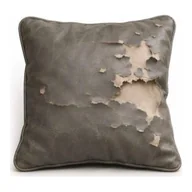
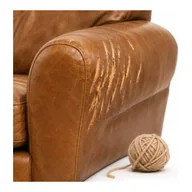
If you can feel grooves and the scratch looks fuzzy or suede-like, the claw went through the finish into the leather. These can usually be repaired and refinished so they blend far better, though some texture may still show when light hits from the side.
Shredded arm or back corner
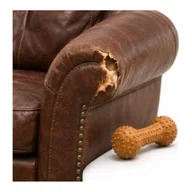
Cats tend to pick one spot – usually the side of an arm or a back corner – and work it over and over. If the leather is rough but whole, it can be repaired and refinished; if it’s torn through or worn thin, a patch may be needed.
Pinholes from kneading claws
Cats that knead leave small pinholes and pulled fibers instead of lines, often on the seat or the top of the back where they lie. If the holes are tiny and the leather around them is sound, repair and refinishing usually help; dense clusters may need a patch.
What to do right now.
- Put a scratching post or pad right next to the spot your cat uses, and cover that spot with a throw or furniture guard for now.
- Keep your pet’s nails trimmed, or ask your vet or groomer to do it, so new scratches stay shallow.
- Try gently rubbing a light scratch with a clean, dry fingertip; on some soft leathers that alone makes it less visible.
- Photograph the whole couch and each scratched area in daylight, plus one shot from the side so the depth shows.
What not to do.
- Don’t color scratches with a marker or shoe polish; it sits on top, looks darker or shiny, and has to come off before refinishing.
- Don’t sand, shave or cut off fuzzy fibers yourself; you can thin the leather and turn a scratch into a hole.
- Don’t rub in olive oil, coconut oil or furniture polish to hide scratches; they can darken leather unevenly and leave a residue.
When it’s not worth repairing.
If the couch is bonded or faux leather, scratches usually mean the thin top layer is broken, and it tends to peel from there – refinishing can’t rebuild it. And if your cat still goes after the same arm, fix the habit first, or you’ll pay to repair that spot twice. On genuine leather with a solid frame, scratch repair is usually worth it.
How we fix it.
- Text photos to (702) 622-0659 for a free estimate. We’ll tell you honestly how much better the scratches can look and what may still show.
- We clean the leather, repair deep claw marks and roughed-up areas, and patch any spot that’s torn through.
- Then we color-match and refinish the scratched sections so they blend with the rest of the couch.
- For larger pieces, call (702) 553-3273 to arrange pickup and delivery; charges may apply.