- Can it be fixed?
- Usually, on genuine leather – color can be matched and refinished, even on a sun-faded side.
- Safe to fix yourself?
- Conditioner keeps leather supple but won’t bring color back; DIY dye kits often dry blotchy.
- What decides the cost?
- Couch size, how many sections faded, the leather type and color, and any cracks to repair first.
- Mail it in?
- Not for furniture or car seats. Pickup and delivery are available for larger pieces.
- While you wait?
- Some small repairs, yes. Call ahead.
Which problem is it?
Lift a seat cushion, compare the hidden leather with the faded parts, then find your case:
Sun-faded on one side
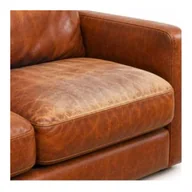
The arm, backrest top or seat nearest the window has gone lighter or changed tone, while the leather under the cushions still shows the original color. That’s sun fading. On genuine leather, cleaning, color matching and refinishing usually bring the color back.
Color worn off where you sit
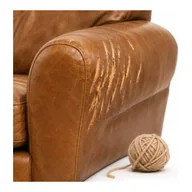
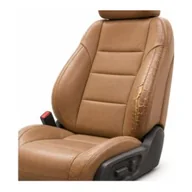
Arms, seat fronts and headrests lose color from hands, legs, body oils and sweat, and may look lighter, dull or shiny. If the leather is still whole, refinishing restores the color. If it’s worn thin or cracked there, those spots are repaired first.
Light patches after cleaning
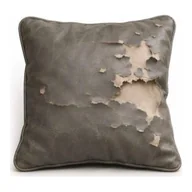
Blotchy pale spots that showed up after using wipes, an all-purpose spray or a scrubbing sponge mean the cleaner took some of the finish and color with it. The leather underneath is usually fine, and refinishing the section evens it out again.
Natural leather, faded unevenly
Very soft leather that darkens when a drop of water touches a hidden spot is likely aniline, with little or no protective finish. It fades and marks easily. Color can be restored, but it changes the look a little, so we’ll talk it through first.
What to do right now.
- Take photos of the faded areas next to the hidden leather under a cushion so the original color is easy to see.
- Close the blinds or curtains when the sun hits the couch, or move it away from the window so the fading doesn’t spread.
- Dust it and clean it with a soft, damp cloth and a mild leather cleaner instead of household wipes or sprays.
- Check the tag or paperwork for words like “aniline,” “top grain” or “bonded,” and photograph it.
What not to do.
- Don’t cover faded spots with shoe polish or a household dye; it can rub off on clothes and has to be stripped before refinishing.
- Don’t scrub the light areas with harsh cleaners or abrasive sponges to even them out; that takes off more color.
- Don’t touch up only the lightest spot yourself; a single dyed patch usually looks darker or shinier than the faded leather around it.
When it’s not worth repairing.
If the couch is bonded or faux leather, new color is a short-term fix at best – those surfaces tend to crack and peel next, and color can’t hold to a surface that lifts. And if the frame is broken or the cushions have gone flat, fresh color won’t change how it sits. A solid genuine leather couch is usually worth restoring.
How we fix it.
- Text photos of the whole couch, the faded areas and the leather under a cushion to (702) 622-0659 for a free estimate.
- We clean the leather first, so dirt and body oils aren’t trapped under the new color, and repair any cracks or worn-through spots.
- Then we color-match to the original color and refinish whole sections, so the couch looks even instead of patched.
- For larger pieces, call (702) 553-3273 to arrange pickup and delivery; charges may apply.